
Biologisation sounds like a very technical term. What is behind the GDI Major Shift?
Gian-Luca Savino: Biologisation describes a fundamental shift away from mechanical and industrial approaches towards biological and organic solutions. Biological principles are thus becoming an integral part of science, technology and industry. Biology is merging with technology and is itself becoming a tool for medicines, materials and even food. The catalyst for this is the dramatic fall in costs over the last two decades. In 2001, sequencing a human genome still cost around USD 95 million, while it only costs a couple of hundred dollars nowadays. Since the Human Genome Project was completed in 2003, the CRISPR gene-editing tool founded in 2012 and the mRNA vaccines developed during the pandemic, we have been able to both identify our genetic make-up and also modify it in a targeted manner. For the healthcare sector, this means that medicine can be tailored to an individual’s genetic constitution rather than to the average patient.
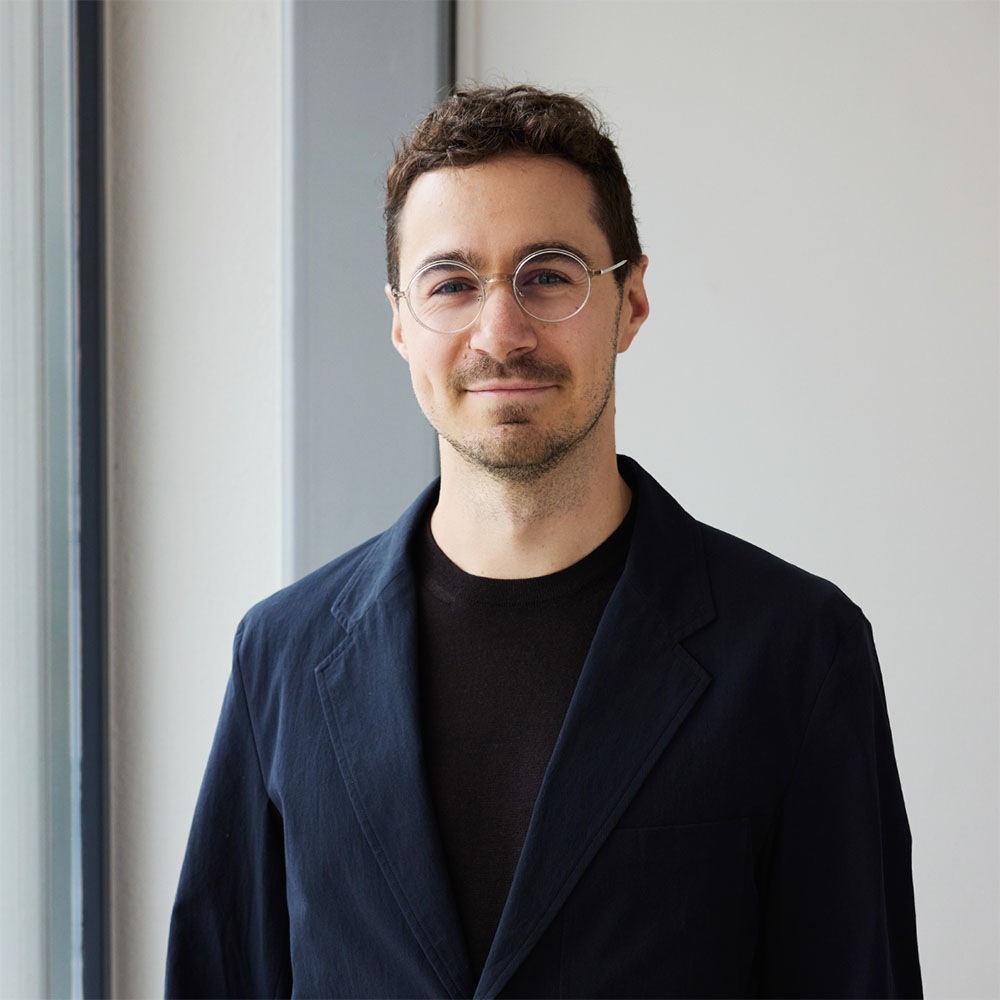
Gian-Luca Savino
Senior Researcher and Speaker, GDI
As a computer scientist with a PhD, he analyzes global trends in technology and the environment, as well as their impact on business, the economy, and society.
Susan, to what extent is biologisation a relevant development for businesses?
Susan Shaw: Biologisation is currently a very important GDI Major Shift for many sectors, such as our client, the health insurance provider Helsana. Biologisation is raising policyholders’ expectations in terms of personalised precision medicine. Instead of reactive care, policyholders want to receive proactive, personalised healthcare in the future. This poses a challenge to the standardised treatment options currently offered by healthcare providers. In future, there will be an increase in demand for data-driven and personalised healthcare services.
A check-up of health needs
Health insurers are offering service packages that customers can rely on throughout their entire lives. This makes it all the more important for Helsana to understand current and future customer needs and to factor them into product development. Our Strategic Foresight team supported the health insurance provider in this process: as part of an environmental analysis, the GDI identified the key GDI Major Shifts for the healthcare sector and derived the specific implications for the supplementary insurance business from these. These were critically reviewed in more than 20 expert discussions and evaluated together with customers. Afterwards, future-oriented product solutions were developed and then prioritised in collaboration with Helsana. The in-depth analysis of long-term developments in the healthcare sector provided a clearer understanding of future customer needs.
What challenges does biologisation pose for the healthcare sector?
Gian-Luca Savino: Processes within the healthcare sector, such as the development and approval of new medicines, are extremely time-consuming and expensive. A high degree of personalisation – even if technically feasible – therefore poses a major challenge for the entire sector. The current licensing system in medicine is based on large-scale data from large randomised trials involving thousands of patients. In the case of a treatment designed for a specific individual, this principle no longer applies. Statistical certainty, cost-effectiveness and a high degree of personalisation therefore come into conflict with one another. Furthermore, there is a need for interoperable health data, specialist staff and data privacy for highly sensitive genetic data. Establishing and maintaining this infrastructure is a matter for the pharmaceutical industry, hospitals, regulators and the sector as a whole to deal with.
Susan Shaw: This shows that this shift is a truly mammoth endeavour that will disrupt the entire healthcare sector and its current business models.

Susan Shaw
Head of Strategic Foresight, GDI
She leads the Strategic Foresight division, which makes the GDI's research, studies and expertise available for practical application.
What are the factors driving the shift towards personalised precision medicine?
Susan Shaw: On the one hand, the sustained high level of public interest in tests and analyses, such as genetic tests for the early detection of diseases and for microbiome analyses. This further fuels customer demand. On the other hand, technological developments are allowing for quick and easy access to such services. At the same time, precision medicine enjoys a high level of trust and is raising great hopes. However, scalability and therefore costs remain a stumbling block.
Is scalability generally an issue in biologisation? Gian-Luca, how do you think this situation will develop from here?
Gian-Luca Savino: Scalability is the key issue, as the technology and the treatments behave differently. The technology is already scaling in the same way as software: genetic tests available directly to consumers and microbiome analyses are two examples of how tests are developed and then carried out millions of times. A large number of people have been taking commercial genetic tests for a long time now. This market is growing and, above all, is leading to greater acceptance within society.
And what about on the treatment side of things?
Gian-Luca Savino: It’s actually the exact opposite: the more personalised a treatment is, the less well it scales. There are currently high hopes for AI. AI-assisted medical research is growing at a rapid pace. If we can use AI to not only design active substances more quickly, but also to truly understand how they work, then clinical trials can be designed on a smaller scale and in a more targeted manner. From the outset, you only test those people who actually respond, rather than thousands.
In rare individual cases, for which a large-scale study would never be able to recruit enough patients, the development process goes one step further: if the genetic cause is known and it can be demonstrated that a drug targets precisely this cause and is effective in the individual patient, this can replace a large-scale study. In early 2026, the US Food and Drug Administration (FDA) set out an initial framework specifically for this purpose. At present, the costs involved in research, in particular, continue to fall. The real hurdle remains in getting a drug – designed for a single person – to market.
Are companies lagging behind the technological developments being made?
Susan Shaw: AI has further accelerated rising customer expectations, in some cases faster than companies have been able to adapt their offerings. During the expert discussions we held on behalf of Helsana, there was a great deal of understanding for the need for personalised precision medicine. However, such solutions are barely affordable at present. Nevertheless, there is potential, for example in the upstream and downstream supply. Supplementary insurance can help to fill this gap. It is not yet clear how the policyholders' willingness to pay for such services will develop in relation to whether expectations are met. This is because rising premiums are proving a cause for concern for many policyholders.
Gian-Luca Savino: Costs are a major issue in the healthcare system. There is a fine line between genuine prevention, which benefits the entire population, and premium services, such as costly longevity treatments. To ensure sustainable healthcare is available for the entire population, stakeholders in the healthcare sector are being faced with the question of how they can capitalise on economic opportunities without at the same time promoting a two-tier healthcare system.