
Credibility is proving a huge challenge in the age of AI. It also plays a key role in relation to focus as it determines who recipients give their attention to.
Three factors have a major influence over credibility. In his keynote speech, Gian-Luca Savino, senior researcher at the GDI, outlined these factors and how their importance is shifting. One of them is expertise. While expertise, experience and a strong track record remain relevant, they have become less important. For example, the unchallenged position of authority of doctors and professors is now not as strong as it was a few years ago. The second factor is integrity, which is reflected by honesty, transparency and consistency. Presentation has become a highly relevant third factor in the digital age – the high profile and appeal of content help to establish credibility. AI is extremely good at this task. In response to a single prompt, it produces well-structured and beautifully presented results at the touch of a button. We entrust ChatGPT with our deepest secrets, seek its financial advice and input for business strategies. Savino predicts that the importance of presentation will wane in future while integrity will come to the fore. "As the recent example of Anthropic shows, championing values can prove extremely successful when the stakes are high." The company rejected the use of its AI system Claude for mass surveillance purposes and in autonomous weapons systems, foregoing a USD 200 million contract with the US government, while user numbers skyrocketed.
The communication onion
Mai Thi Nguyen-Kim combines the factors expertise and presentation by communicating scientific topics in an engaging way. When an issue gains lots of attention, there can be negative effects too, for example for scientific communication, on which the spotlight fell during the COVID-19 pandemic. However, media coverage created an incomplete view of science – one without any nuances which are vitally important in this discipline. Mai Thi Nguyen-Kim, who holds a doctorate in chemistry and is a science journalist, proves that complex topics can be presented to the public successfully. On the podium at the GDI Trend Day, she likened her approach to an onion. At its core lies the complex study which can only really be understood by experts. On the outer layer, science is conveyed as a dance or TikTok video with a much broader reach. All layers play their part in ensuring information is communicated extensively. Simplifying complex topics encourages people to explore deeper layers without shedding any tears. During the podium discussion, Nguyen-Kim underlined that simplified information still needs to be correct: "Clickbait is OK provided the title – even without the video content – does not contain any disinformation".

Strong brands point the way amidst all the noise
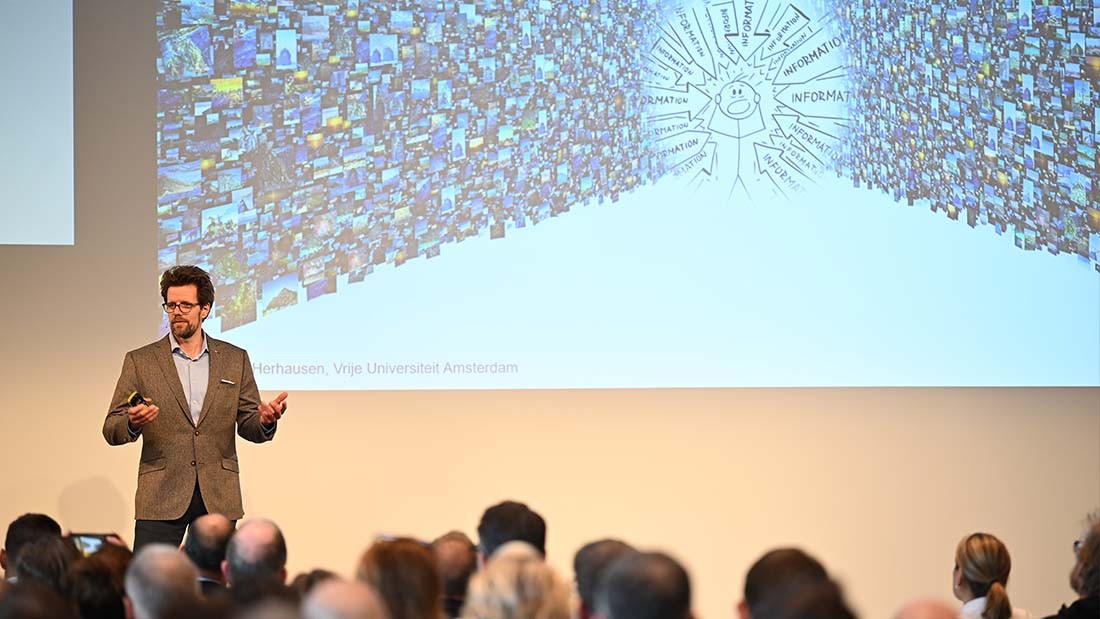
By sending out clear and consistent signals, brands can guide customers. Dennis Herhausen, Professor of Digital Marketing & Analytics and Head of the Marketing Department at the Vrije Universiteit Amsterdam, firmly believes this to be true. Companies do not need to become louder, but should instead focus on sending out the same consistent signal, like a beacon. This reduces complexity by enabling us to focus on products when making purchasing decisions. It may evoke emotions, for instance by linking the brand with childhood memories. It helps to establish identity too as we identify with the same values.
Show focus, stay consistent and be brave enough to avoid trying everything
If AI agents take over entire purchasing processes in future, brands will have to address them as a second target group. AI has no interest in identity nor emotions and is good at dealing with complexity. To appeal to AI agents, companies must ensure it can make comparisons by providing structured data on products or services. Sending out the same, consistent signals ensures machine-based verifiability and avoids contradictions, while use cases help AI agents to find the best fit for the search request. For companies, this means: "Show focus, stay consistent and be brave enough to avoid trying everything," sums up Herhausen.
Extremism and disinformation on the rise
Faithfully championing your own values goes well beyond credibility and building strong brands. Julia Ebner, Co-Executive Director at the Institute for Strategic Dialogue (ISD), underlines the importance of the private sector's role in challenging authoritarian regimes. Extreme views are no longer restricted to dark corners of the web. They appear prominently on mainstream platforms and are even being expressed by politicians. Extremist groups are also reaching young people, in particular, through highly adept micro-targeting, gamification and references to pop culture. They apply global narratives to local issues, exploiting fears and evoking strong emotional responses.
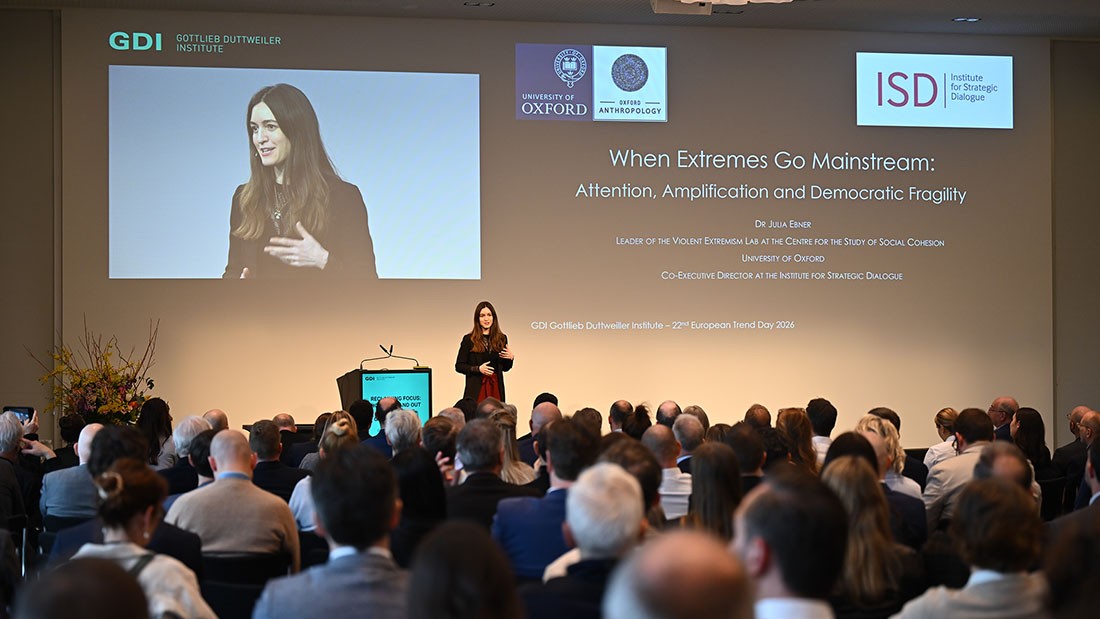
They also take advantage of the phenomenon of identity fusion. Shared experiences - which often also happen online - establish a strong bond with a group. Individual identity is fused with group identity. Destructive narratives are used to allude to external, existential threats to this group. However, Ebner believes this phenomenon could be put to positive use too. Companies can create shared experiences for a broad section of the population, unifying and connecting all sorts of different people. Julia Ebner fears AI will intensify disinformation campaigns, inflaming the situation. Psychological and technological resilience is becoming ever more significant: "We must be aware of the deeper psychological impact that being exposed to disinformation, toxic groups and online communities can have on us - not just as individuals, but also as groups and societies."
Enshittification of the internet
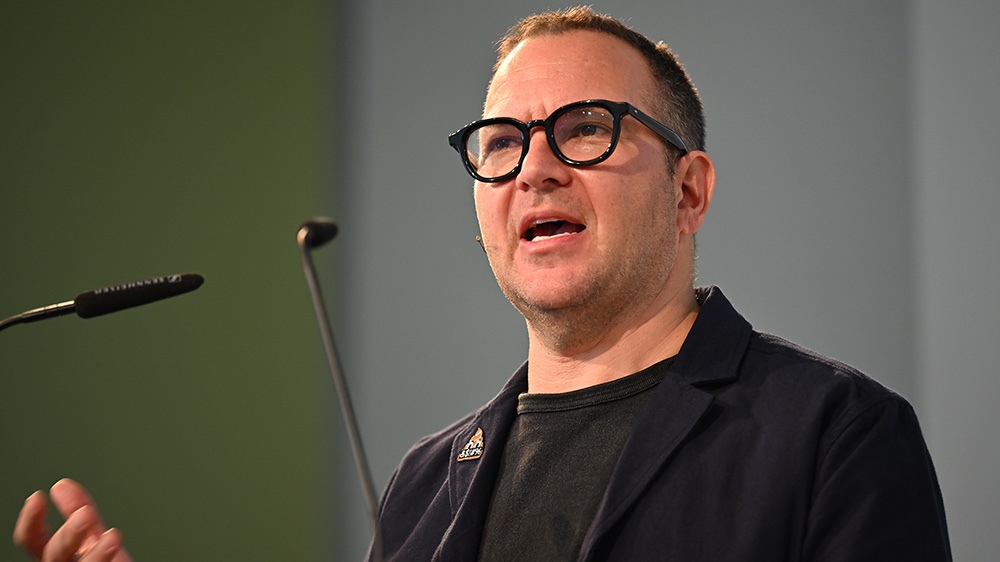
Facts and credible information are widely available online. But what if online solutions not online contain extreme messages but also continually deteriorate? Tech activist Cory Doctorow describes this process of decay in three steps. Firstly, platforms provide users with real added value, retaining their loyalty. The second step is where the platform and user data collected is monetised to optimise it for companies and advertisers. In the third and final step, business customers suffer too, for example, because placement gets increasingly expensive, while the reach of adverts declines. The platform operators keep most of the profit. So why do they adopt this approach? "They enshittify platforms for the same reasons a dog licks its balls - because they can" explains Doctorow. The lack of a regulatory framework enabled this to happen in the first place. That is why he is campaigning for legislation aimed at protecting users instead of increasing the profit and power of tech billionaires.
Simple better than complex
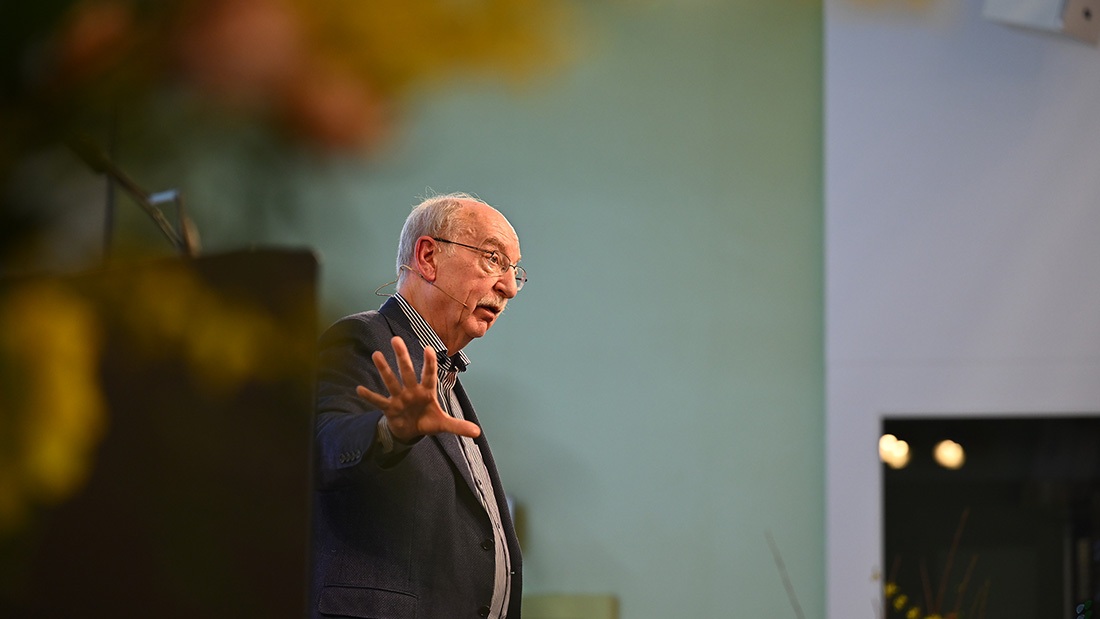
Gerd Gigerenzer, a psychologist and risk researcher, points out that complex algorithms are primarily based on the premise of a stable world. In other words, where tomorrow is exactly the same as yesterday. Even better are clear rules, like in chess, which work by means of pure reinforcement learning. Complex issues and uncertainty are much more challenging, such as making predictions about influenza. The forecasts provided by the Google tool based on big data are less accurate than a much simpler, 'psychological' AI model. The latter solution only ever refers to the last data point, i.e. medical appointments during the previous week. This enabled it to make more accurate predictions, especially for atypical events, such as swine flu which took hold in the summer. "In situations of great uncertainty, it is better not to rely on big data or complex algorithms, but instead to keep it simple. Then you stand to benefit," says Gigerenzer. Like Julia Ebner, the psychologist also advocates digital education. Understanding data and what AI systems can and cannot do is more important now than ever: "Humans must regain control. Control over their own opinions, thoughts and emotions."
Back to the real world
As exciting as AI seemed initially, Nathalie Nahai, author and expert on AI and creativity, also underlined how the constant noise results in digital fatigue. People are increasingly withdrawing from social media and switching off their notifications. That applies to young people too: in a survey conducted by the British Standard Institution, almost half of respondents indicated they would like to live in a world with no internet. Amidst all the lethargy, we must regain the ability to act, as Gerd Gigerenzer also pointed out.
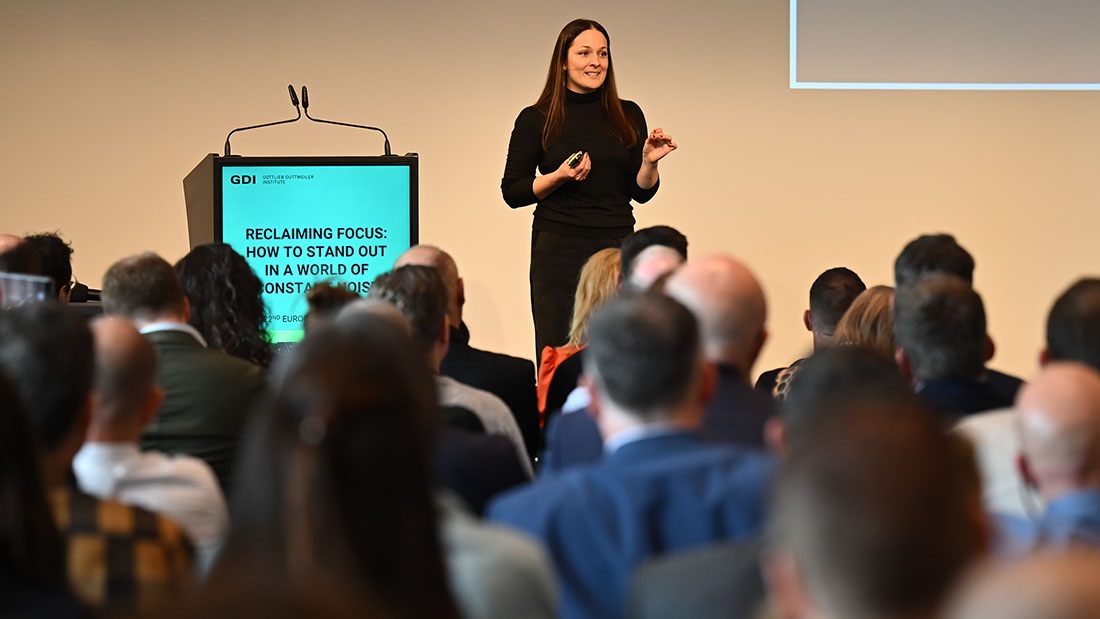
We get one precious Shot at this life. Technology that we employ needs to be in service of what we love. And businesses have a huge role to play in that future.
In a reality where algorithms manipulate us and AI makes everything homogenous, opportunities are opening up for companies. Real experiences are becoming more valuable again and provide the option for sending out strong, consistent signals. Nahai believes this means using technology in a more targeted way rather than dismissing it completely: "We get one precious Shot at this life. Technology that we employ needs to be in service of what we love. And businesses have a huge role to play in that future."
What the future holds
Polaroid cameras, going offline, shunning social media: real life is becoming more important amidst all the digital distraction. James Taylor-Foster, curator and cultural strategist, predicts that human senses will become more prominent again in addition to purely visual experiences on screens. Taylor-Foster brought Autonomous Sensory Meridian Response (ASMR) - acoustic stimuli that trigger a pleasant tingling sensation which has a calming effect and improves focus - to the museum with great success. Taylor-Foster sees this as a sign of change: "Artists are usually one step ahead. And I hope to god, they are now."
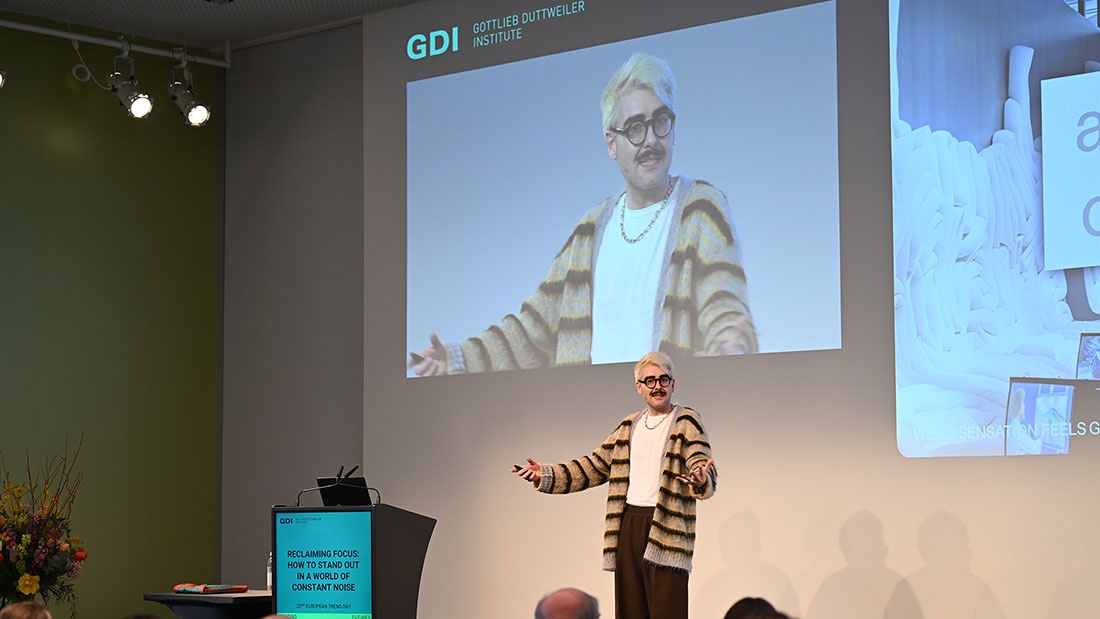
Impressions from 22nd European Trend Day vom 22. Europäischer Trendtag.
Outlook
The next European Trend Day will be held at the GDI on 10 March 2027. Take a look at our other conferences for networking opportunities with visionary decision-makers at the GDI: we are delighted to invite you to the International Food Innovation Conference and the International Retail Summit on 16 and 17 September.