
“The food industry is the infrastructure that is connecting everyone and is keeping humanity alive. And sometimes we underestimate that. We undererstimate our responsibility of feeding the planet,” said Sara Roversi. Right at the start of the International Food Innovation Conference at the GDI, the founder and president of the Future Food Institute positioned nutrition as a link between health, community, culture, identity, ecology and the economy. The new food system must ensure a shift from efficiency to resilience by taking account of health, access, culture and planetary limits. AI can be the driving force that powers this change. However, Roversi underlines that our values must set the direction of travel and be at the heart of all decision-making.
From data silos to system networks
While consumers may barely notice, the ingredients in food are a major factor in the food system. Fabio Campanile, Head of Science & Technology at Givaudan, believes AI is an invaluable tool in identifying new ingredients. AI can analyse vast quantities of data on molecules to find healthier, more sustainable or less expensive, yet still tasty, alternatives. For example, this enables alternatives to cocoa to be identified, the amount of sugar and salt to be cut without compromising on taste and new functional ingredients to be pinpointed.
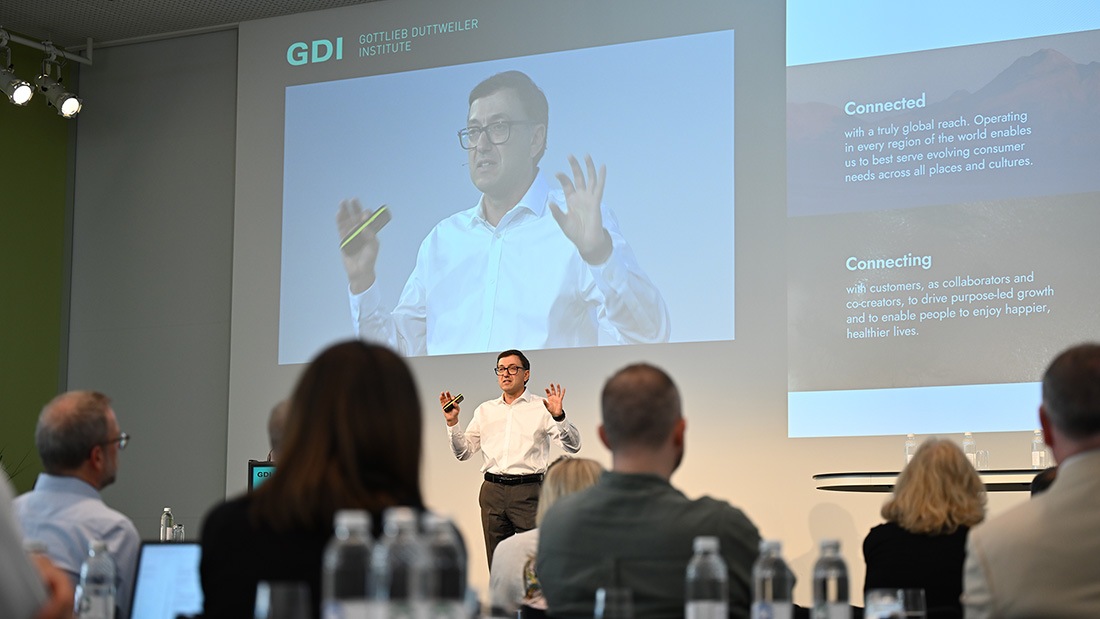
Sean Sims, Automation & Solutions at Tetra Pak, uses AI solutions at the company's production plants. He clearly underlined that better decision-making, not technology, is what transforms a plant: “If your operation isn’t stable, structured and understood, AI just scales the noise – at a high cost.” In addition to a robust, automated foundation, contextualised data plays a vital role in overcoming challenges too. Finally, the structure must enable continuous improvement. The link between data and decision-making and change management are just as important as tech adaptation.
If your operation isn’t stable, structured and understood, AI just scales the noise – at a high cost.
Mar Serra, Global Product Technical Applications & Digitalisation Lead at Nestlé, picks up on and underlines the same point using an example. There was resistance to an highly sophisticated tool developed in-house to optimise recipes. This was due to the fact that hidden macros in the Excel spreadsheets used previously contained a great deal of implicit information, such as mineral content ratios or compliance requirements. The transition was achieved by highlighting use cases that showed the benefits of the new system as well as by onboarding early adopters from various departments. Serra indicated that digitalisation should ideally produce seamlessly integrated workflows.

Individual tools are of limited use if data, workflows and teams remain separate.Ilias Tagkopoulos, professor and director of the USDA/NSF AI Institute for Next Generation Food Systems, fully endorsed this view. AI's multiplier effect really starts to perform when integrated across the entire value chain: from seeds, cultivation, processing, production and consumption, right through to health data, and then right back into development. However, this approach is still not yet being adopted: “The connective tissue is missing, both in a technical and mental sense,” revealed the computer science professor. Tagkopoulos believes that by creating a fully integrated system, AI will improve food innovations focused on prevention, health span and personalised healthcare.
The future of decision-making
Paul Hammer, CEO and founder of Biomes, views prevention and personalised nutrition as key priorities. His company uses microbiome profiles, lifestyle/health data and scientific publications to create its AI model for developing personalised dietary plans, coaching programmes and predictive models, for example for type 2 diabetes. The microbiome is made up of all the microorganisms that colonise the human body and is as unique as a fingerprint. It also provides a central set of data on the state of personal health.
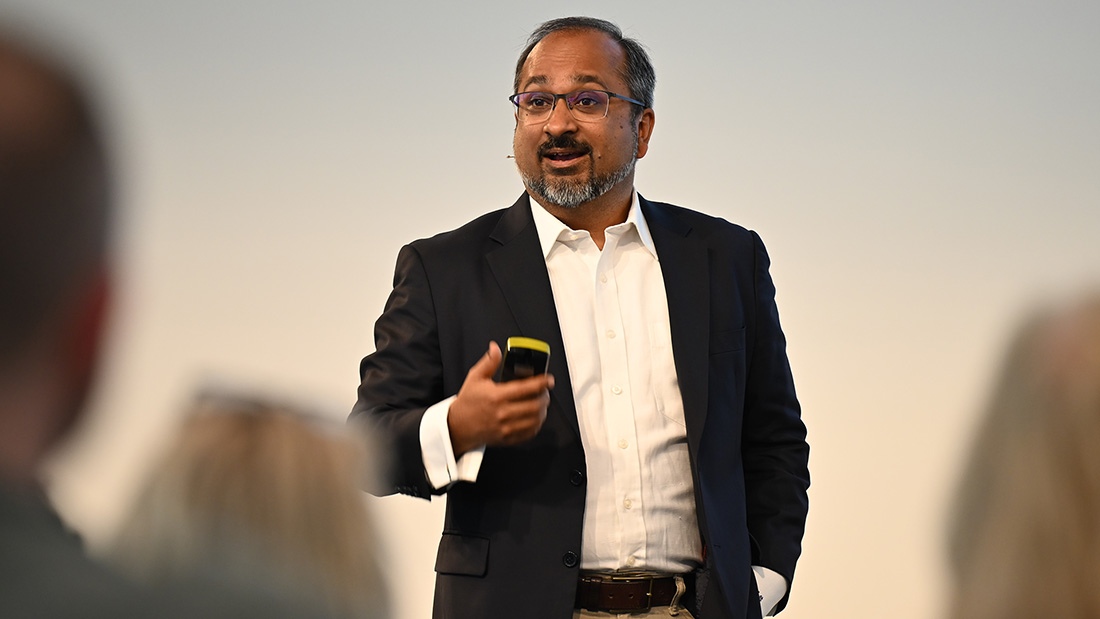
However, AI is not simply being used for analysis or to provide recommendations. Anirban Mukhopadhyay, Professor of Marketing and Behavioural Science, made clear that AI is transforming every stage of the customer journey. It influences our needs, finds information, evaluates options and streamlines decision-making processes by making specific recommendations. What shortening the process from searching for information to decision-making and increasingly delegating judgement calls to AI means exactly is still unclear. In particular, this applies to major decisions into which a greater amount of energy is invested. For example, he raised the question of whether selecting the perfect restaurant for your wedding day is still just as significant if AI handles everything from the search to booking.
Use AI to help people to achieve their own goals. Because that is what we need as a society.
In terms of what we eat, we are faced with lots of interrelated decisions: what, when and how much we eat shapes our identity, social relationships and society. Mukhopadhyay appealed to decision-makers at the event: “Please use AI to help people to achieve their own goals. Because that is what we need as a society.”
Humans and machine: a hybrid path to success
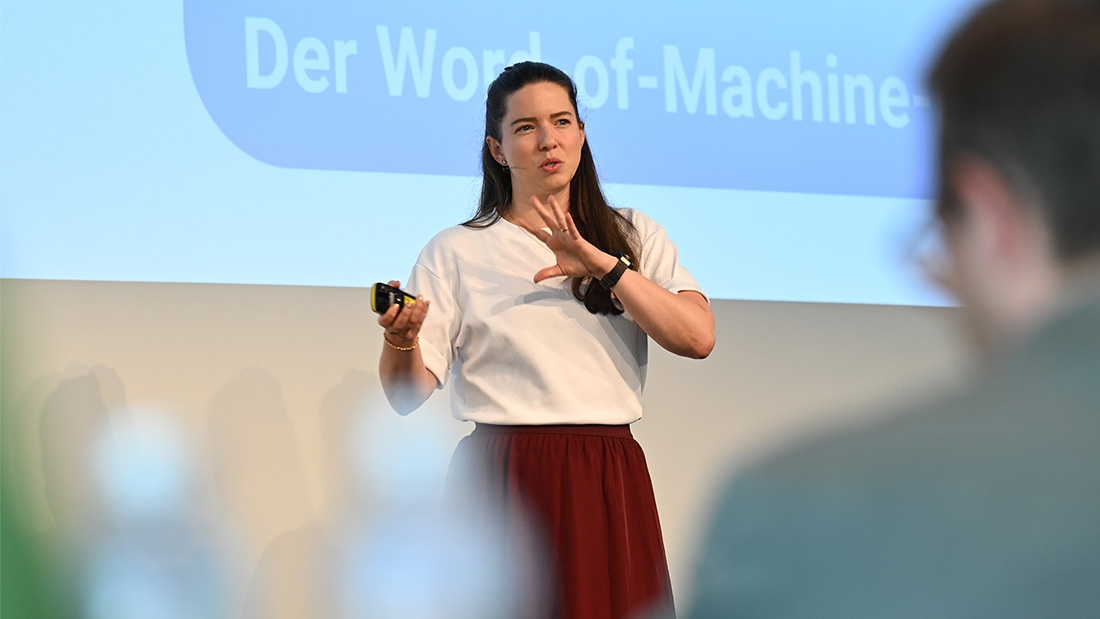
Christine Schäfer, a senior researcher at the GDI, picked up the debate, exploring AI's impact on our food culture. Her input was based on the GDI study «Decoding Food Culture», which identifies six dimensions of food culture. The (personalised) meal – involving the dimension of control and health – is highly AI-compatible – whether that means calorie tracking or personalised dietary recommendations based on the microbiome. Schäfer compared the opposite end of the spectrum to situations where people eat together. The dimensions of community and sense of belonging are identified as incompatible with AI in this respect. A real sense of connection cannot be artificially created and traditional techniques or cultural aspects often exist offline, making them invisible to AI. For example, an AI solution may be able to describe a fondue recipe but would struggle to capture the feeling of dipping bread together, dropping it into the pot and laughing about it. In-between lie the AI-ambivalent dimensions of rituals and enjoyment. AI can only provide limited support in these dimensions. This means companies need to consider how they can cater for both individual dishes and meals enjoyed together in future. Nutritional value, price and efficiency are the driving factors for the first consideration and a sense of community, enjoyment and cultural roots for the latter. One thing is clear: “AI can optimise what we eat but we must set the table ourselves.”
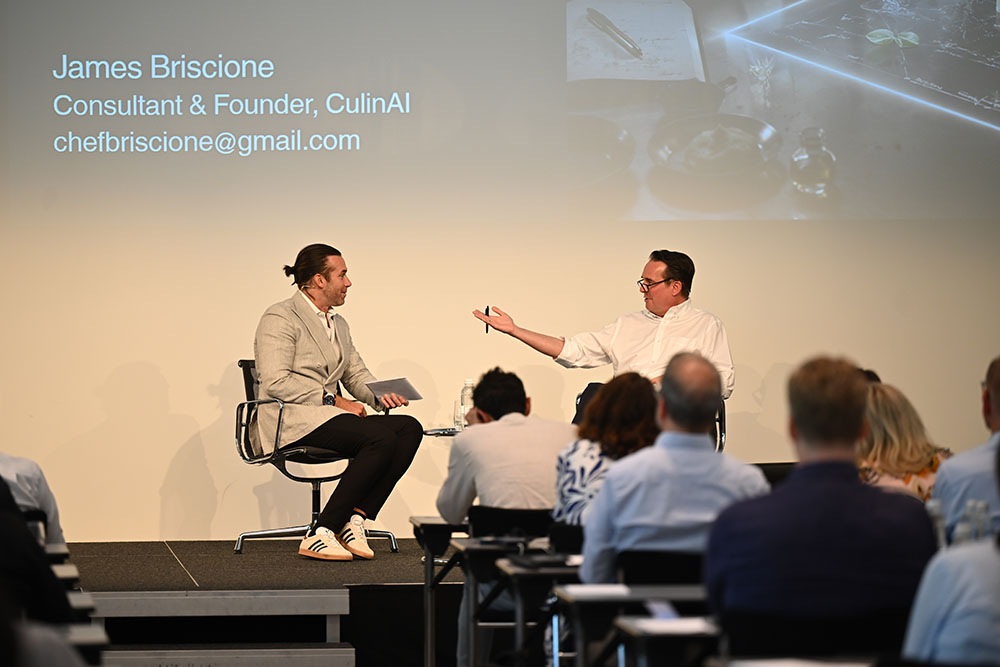
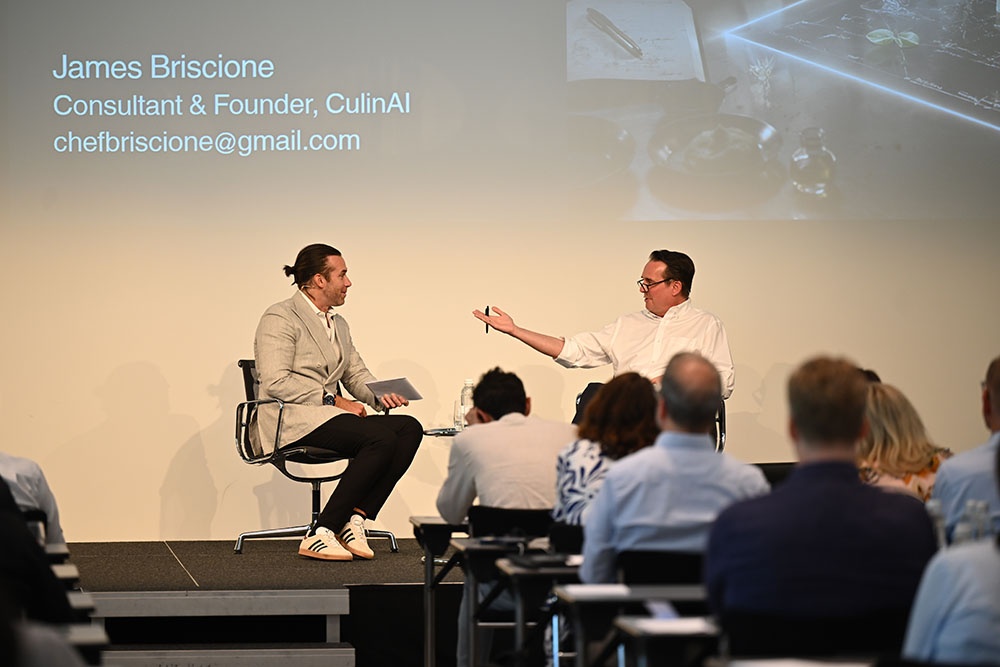
Chef James Briscione, co-founder and CEO of CulinAi, was an early adopter of AI in his kitchen. His experience of using IBM's Watson over ten years ago taught him that AI can produce some astonishing flavour combinations – a skill he previously thought only humans were capable of: “The understanding that flavour could be viewed as data and thereby understood by a machine was very eye opening. ” AI became a creative partner for Briscione that could propose new combinations based on chemical compounds which the chef then uses to create well-balanced dishes. Collaboration in the kitchen is the key to success.
Drei Erkenntnisse für den Einsatz von KI
- Data networks are a key resource
Noch sind viele Daten unzureichend vorhanden – von kaum verstandenen Molekülen in Lebensmitteln über Fabrikdaten ohne Kontext, implizit vorhandenem Wissen in Unternehmen bis hin zu rein analogen Traditionen. Neben der Datenbasis ist auch die Integration entscheidend. Denn KI verändert das Ernährungssystem nicht durch bessere Modelle allein, sondern indem sie bisher getrennte Daten, Prozesse und Akteure miteinander verbindet. - Speed needs direction
There is still not sufficient access to lots of data – including molecules in food, about which little is known, production data lacking context, implicit knowledge available within companies and traditions that exist purely offline. In addition to databases, integration is a key factor too. This is because AI is transforming the food system not simply by creating improved models, but by linking previously separate data, processes and actors. - Hybrid approach to success
AI recognises patterns, simulates tests, optimises processes and scales production. Humans set goals, assess relevance, bear responsibility and contribute context, taste, intuition and cultural knowledge. This combination is vitally important for the future of the food system. Humans define values and the path to be taken, whilst AI optimises processes along the value chain.
Impressions





Outlook
The future of the food system emerges where different perspectives overlap: research and application, technology and society, innovation and responsibility. That is exactly what the GDI provides a forum for. The next International Food Innovation Conference will take place on 23 June 2027. On 16 and 17 September, we are hosting the International Retail Summit, once again bringing together leading figures to analyse developments and provide fresh insights.