
Not just a question of immigration growth
Behind the vote lies not only a dispute over immigration and growth, but also a conflict over how future burdens and benefits will be distributed. This is precisely where a political economy perspective is helpful. For both a hard cap of 10 million residents and continued largely unrestricted immigration shift costs, benefits, and burdens in different ways. They affect different groups to varying degrees, create different follow-on conflicts, and are therefore also assessed differently. The underlying question, then, is not simply how much immigration Switzerland wants, but which conflicts it is prepared to bear and negotiate politically.
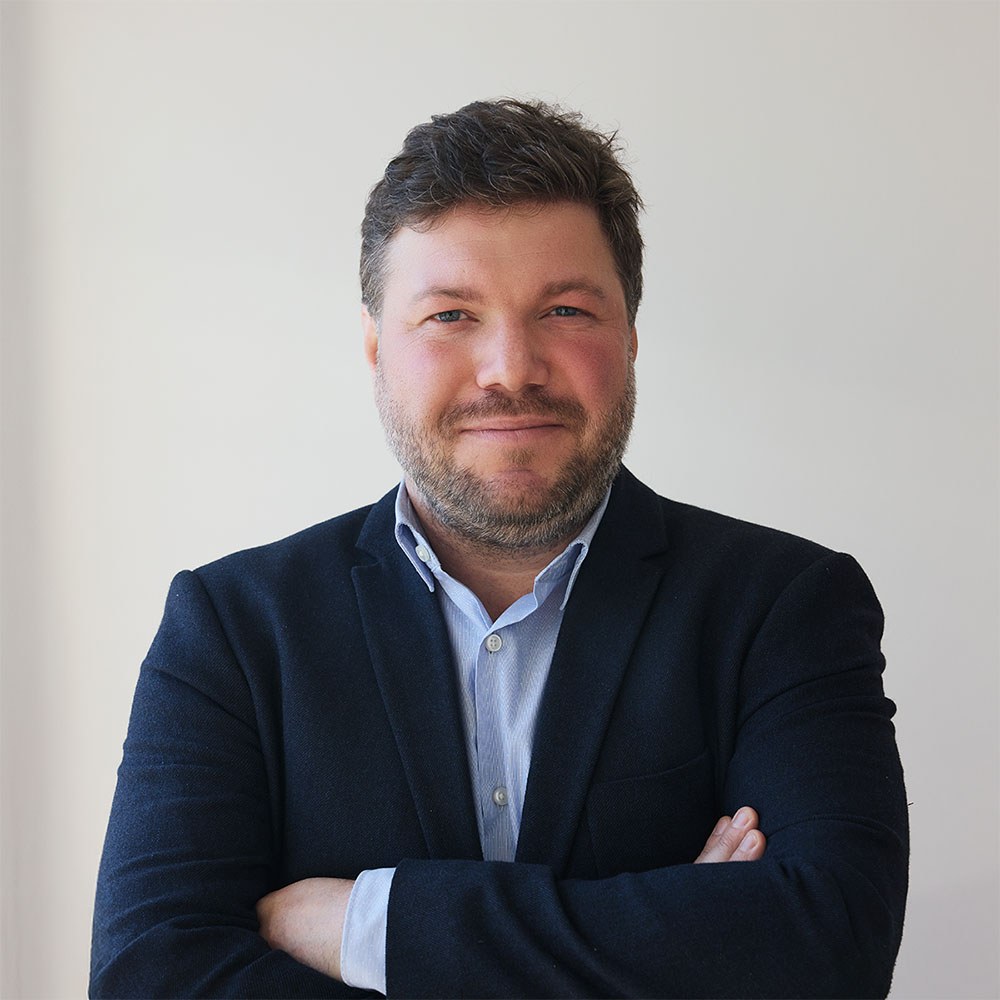
Joschka J. Proksik
Senior Researcher and Speaker at GDI
As a political scientist with a PhD, he analyses the interactions between geopolitics, economy, society, environment, and technology.
More about the author
In the Event of a “No” Vote: where growth creates scarcity and conflict
Today’s labour-market-driven immigration contributes to a form of growth that is driven less by productivity gains than by a larger population, a larger workforce and higher demand. For many companies, this opens up additional opportunities for expansion, especially in sectors where population growth translates directly into higher revenues. At the same time, a growing population increases demand for labour, goods and services, thereby creating a dynamic that to some extent reinforces itself. Companies also benefit from access to a larger pool of workers, especially from the European labour market, with its large supply of well-trained labour.
The follow-on costs of this growth model, however, are felt more widely. This is particularly evident where growth requires additional expansion. It is currently most visible in the housing sector. Increased demand is meeting a supply that is not growing at the same pace, particularly in urban centers and attractive locations. The result is rising rents and growing pressure on housing, infrastructure, and public spaces. This is where it becomes clear that many of these goods cannot simply be expanded at will: not quickly, not everywhere, and not always without creating new conflicts. Just how deeply rooted such potential conflicts already are is also shown by a recent GDI survey on how Switzerland should grow in the future: Nearly two-thirds of respondents fear that densification will go hand in hand with the loss of green spaces, more waste, more noise, as well as rising rents or a decline in property values. Densification is accepted in principle, but not always and not unconditionally on people’s own doorstep. (1)
When expansion meets resistance
This reveals a familiar pattern, one that also appears in other areas: many changes are considered sensible or even necessary in principle, but encounter resistance as soon as the associated burdens become concrete at local level. The so-called NIMBY effect, short for “not in my backyard”, is ultimately also a distributional conflict: the general benefit is acknowledged, but the concrete costs and disruptions should, as far as possible, be borne by others. This applies not only to housing construction, but also to energy, transport and other infrastructure. And it is not only a spatial issue, but also a financial one: as long as expansion remains abstract, support is often high. Once it involves concrete interventions, levies or additional public funding, resistance grows.
With further population growth, the need for expansion and financing continues to rise. This also intensifies conflicts over how the necessary public funds are raised, where investments are made, and which projects are prioritized. Precisely because many costs arise immediately, while their benefits are often spread over years or decades, the scope, timing and financing of such projects become more contested. Recent debates over infrastructure expansion and its financing, for example in relation to motorways or railway infrastructure, already offer a foretaste of this.
Where goals collide
At the same time, these growing distributional conflicts are increasingly supplemented and overlaid by conflicts between policy goals. The necessary expansion is also expected to be sustainable, climate-compatible and economical in its use of land. This gives rise to tensions between legitimate objectives:
- more housing vs. the political goal of ensuring that, from 2050 onwards, no additional land is consumed on a net basis (2);
- growing energy demand and the expansion of renewable energy vs. landscape protection, biodiversity and local acceptance;
- improving supply vs. resistance to new power lines, wind turbines, power plants or transport infrastructure.
A look at the energy supply reveals just how fundamental these conflicting goals are. If Switzerland is to become climate-neutral by 2050 and meet around 60 percent of its electricity demand from new renewable energy sources, a massive expansion will be needed, according to a research consortium that included researchers from ETH Zurich: photovoltaic capacity would have to quadruple, while wind-energy capacity would have to increase by more than eightyfold. At the same time, the researchers note that such an expansion is hardly conceivable without substantial public subsidies (3). Here, too, the conflict over resource allocation resurfaces: public funds allocated to expansion are always in competition with other political priorities.
Where conflicts over resource allocation and competing goals accumulate and overlap, the risk increases that different stakeholder groups will come into sharper conflict with one another. Business, environmental organisations, agriculture, municipalities, commuters, tenants, property owners and supporters of a rapid energy transition each prioritize different issues and weigh the same goals differently. The more population growth intensifies such conflicts, the harder it becomes to satisfy all demands at once. This can make social negotiation more demanding, make compromises harder to reach and slow down political processes. This is precisely where one of the political risks of sustained immigration and the associated scale-driven growth lies.
But what follows in the opposite case? What scarcities and conflicts would arise if Switzerland were to cap immigration rather than allow growth to continue?
In the event of a “Yes”-vote: where limits create new scarcities and conflicts
A hard cap on immigration would not simply end the conflicts associated with further growth, although it could ease some of them. At the same time, it would shift conflicts and in some cases add new ones. What would become scarce would no longer primarily be space, infrastructure and the capacity of public services, but increasingly labour and skilled workers. This could create new bottlenecks in certain areas, not only in staffing itself, but also in supply, availability and quality. In a broader sense, growth impulses and economic dynamism would also become scarcer.
As soon as immigration is no longer determined by the labor market but rather by political limits, various industries and sectors of society would find themselves in competition with one another. Healthcare, nursing, industry, construction, hospitality, research, and agriculture would all have good reasons to point to their continued need for workers. This would give rise to a new conflict over the distribution of scarce labor and skilled workers across various sectors of society. Such a conflict would arise against the backdrop of existing projections about future labour shortages: an analysis by the Swiss National Bank, or SNB, from May 2025 estimates that Switzerland could be short of up to 400,000 workers within just ten years, even without taking a hard immigration cap into account (4).
If policymakers prioritize certain sectors, such as nursing and healthcare, other industries would lose out accordingly. This could result not only in higher costs, but also in a tighter supply of services, declining service quality or, in extreme cases, business closures if open positions can no longer be filled. A cap would therefore also influence where economic dynamism and growth remains possible in Switzerland and where it is being stifled.
Unequal effects
This shift would also likely have uneven regional effects. Just as the burdens of growth are unevenly distributed today, the consequences of a cap would also be uneven. Regions and cantons that rely heavily on additional workers, young people entering the workforce, or new taxpayers would experience a cap differently than those where the main concerns are pressure on housing and infrastructure. The conflict would then not only be about whether there are enough skilled workers overall, but also about where in the country they are still available and where shortages will first become apparent. This could further exacerbate existing regional imbalances, particularly in areas where aging, out-migration, or weaker growth already weigh more heavily today.
The distributional conflicts could also shift in another way. To the extent that immigration currently contributes to the financing and stabilization of systems such as the AHV, the healthcare system, or long-term care, a cap would weaken this support. According to a recent study by the State Secretariat for Migration, limiting immigration would both reduce AHV revenues and increase the costs of mandatory health insurance (5). This does not automatically mean the collapse of social security systems. However, it shows how distributional conflicts could shift: away from the question of how to finance expansion for more people, toward the question of how to distribute tightening financial resources in an aging society.
When politics replaces the market
Precisely because the consequences of a cap would likely be so uneven, a hard ceiling would put the question of political steering at the centre. Once labour and skilled workers are no longer primarily available through the market, but are made scarce through limits and quotas, priorities have to be set. Who gets preference? According to which criteria are decisions made? What role should cross-border commuters, family reunification or highly qualified specialists play? The scarcer the quotas, the more likely this would become a permanent conflict over criteria, priorities and exceptions. A rigid cap would not simply make politics more capable of acting; it would place politics in a new straitjacket. Policymakers would constantly have to decide where to impose limits, where to allow exceptions and how to respond to new bottlenecks.
A cap would shift the dispute: away from the question of how growth can be managed, and towards the question of who is still allowed to come and who gets to decide. A cap would only be more than a political signal if it were actually translated into concrete rules, quotas and priorities. At the same time, it is foreseeable that precisely this implementation would immediately become contested again under pressure from different stakeholder groups, regional interests and economic needs.
When implementation itself becomes a source of conflict
Limiting immigration would therefore not create a conflict-free situation. It would redistribute scarcities within Switzerland differently and generate new conflicts over resource allocation: between industries, between regions, between competing needs for labour and skilled workers, and not least over migration governance itself. Added to this would be external conflicts, particularly in relations with the EU and neighboring countries.
This is also where the risk of a watered-down implementation lies. With the 2014 initiative “Against Mass Immigration”, Switzerland has already experienced how a popular vote on migration policy can be substantially softened in implementation. If this impression were to take hold again after the initiative were accepted, the conflict would not stop at immigration. It would also become a dispute over the political effectiveness of direct democracy and over how binding a popular vote still is within the existing institutional framework.
The limits of both camps
This comparison also reveals the limits of both camps. Those who favour a hard cap should not indulge the idea that Switzerland can thereby be preserved as it is. Even if the population could be limited, demographic change, economic restructuring and social shifts would continue to transform the country.
Conversely, the idea that scale-driven growth can simply be continued indefinitely should also be viewed with scepticism. Such a model eventually runs up against not only ecological limits, but also political and social ones.
Perhaps this is also where a path out of polarisation can be found. Making the distributional questions explicit shows that the debate over 10-million Switzerland is not only an identity-based clash of principles, but also a series of concrete conflicts over goals, uses and consequences. Such conflicts are easier to negotiate than an absolute yes or no. This does not change the fact that the Agreement on the Free Movement of Persons with the European Union leaves only limited room for steering labour-market-driven immigration. But it could help refocus the debate in future on the concrete conflicts that can actually be addressed, rather than on increasingly entrenched ideological positions.
- https://gdi.ch/publikationen/studien/so-will-die-schweiz-wachsen#attr=
- https://www.bafu.admin.ch/de/netto-null-beim-bodenverbrauch
- https://ethz.ch/de/news-und-veranstaltungen/eth-news/news/2025/05/woher-der-strom-im-jahr-2050-kommt.html
- https://www.snb.ch/en/publications/research/economic-notes/2025/economic_note_2025_07
- https://www.admin.ch/de/newnsb/zG4kVnPQnZpTTLeN2fUYe