
At present, many companies feel like a team trailing behind in a match. What’s the secret to performing well under pressure and not losing your nerve?
Oliver Kahn: We should actually be grateful for pressure. You really learn to cope with pressure in these situations. The tension we experience when under pressure enables us to attain outstanding levels of performance. It’s really all about how you look at the situation. The trick is to learn how to turn pressure into a positive experience. There are lots of different techniques and ways to help you to do this.
The greatest sporting athletes have had to learn how to do this too. Performing at a consistently high level under incredible pressure – for example, in front of an audience of millions or driven by their own expectations – is not something that simply comes naturally.
Live at the GDI Retail Summit
Oliver Kahn is one of the greatest goalkeepers in football history. Today, he is speaking about leadership, resilience and dealing with change in times of constant uncertainty. Listen to Kahn speak live on the podium at the International Retail Summit on 16 and 17 September.
Register now
Johannes Bauer: Research into the cognitive appraisal of stress indicates that pressure isn’t the only relevant factor in determining how people react. Whether they feel that their skills, range of options and support available within the team are sufficient to cope with the demands is a key element too. If a situation seems to be spiralling out of control, people soon start to perceive pressure as a threat, causing them to freeze. Conversely, if people perceive the situation as challenging but manageable, they can harness high levels of focus, energy and performance.
Pressure is no longer the exception for many retailers. However, constantly keeping the entire organisation on high alert risks causing uncertainty and paralysis. While leaders cannot simply alleviate pressure in an instant, they can influence how it is dealt with. Three key success factors are important here: setting clear priorities, providing genuine leeway and defining achievable interim goals that clearly show progress. In a retail context, for example, this means store-based teams need to know which customer issues are currently a priority, which decisions they are authorised to make on the ground and how to track actual progress.
Creating a sense of well-founded optimism means clearly identifying risks, while also highlighting strengths, resources and the options available. This prevents pressure from building up into a paralysing, long-term state and turns it into a challenge that can be overcome together and which can act as a driver for outstanding performance.
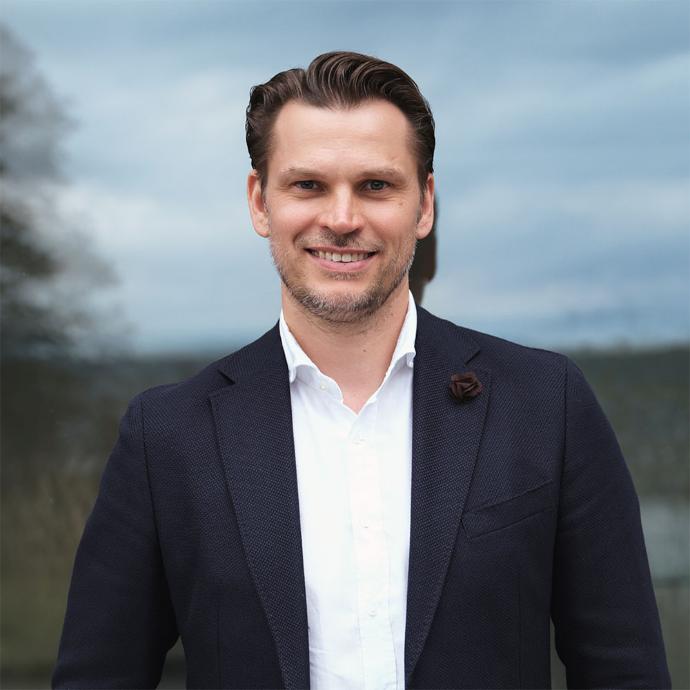
Dr Johannes C. Bauer is Head Think Tank at the Gottlieb Duttweiler Institute. In his research, he examines changes in consumer and purchasing behaviour, the future of retail against the backdrop of long-term consumer, technology and business model trends, as well as the opportunities and risks of digitalisation for business and society.
How can individual determination be turned into collective strength that carries the team through even when placed under great pressure?
Oliver Kahn: Having team members with the kind of tenacity needed is a real blessing. I’m talking about people who are proactive and willing to take on responsibility. They are leaders on the football pitch. However, it is vital to ensure other team members aren’t overlooked either. You need to feel confident that people aren’t just trying to cover only themselves in glory, but are actually committed to the team effort. Only then can tenacious leaders successfully lead the way for the entire group. Other team members will look to them for guidance. It is crucial that leaders understand the roles and blend of characters in their team: people who want to take on responsibility and lead and others who play equally important roles – even though they may not always be in the spotlight.
Johannes Bauer: In the retail sector, key leaders often perform customer-facing rather than back office roles. These include store managers, experienced staff and colleagues who take on responsibility in difficult situations and lead the way for others.
However, individual resolve only produces collective strength if the approach benefits the team and other colleagues’ views are taken into account too. Changes often become apparent first on the front line, such as new customer queries, recurring complaints, product range issues and unusual returns patterns. A key part of leadership is to convert these signals into shared learning experiences and targeted measures. Employees must feel as though they are in a safe space psychologically and at ease raising uncomfortable concerns. However, structural empowerment is only really achieved when employees are not just listened to, but can – with relevant information, sufficient resources and an adequate level of support within a clearly defined framework – make their own decisions, implement improvements and enhance their skill sets.
In the retail context, this means answering the following questions: Which customer signals should store teams share? What decision-making authority do they have themselves? Where can they try out improvements? And how are the insights gained shared within the company?
Every team member does not need to play a leadership role, but everyone has to understand their role and how to make an effective contribution. This means that the best leaders are not the players who decide the outcome of a match, but those who improve the performance of others. Individual tenacity then improves the collective ability to learn and take action.
"Keep going. Always forward." What does that phrase mean to you today? And when is it more important to change direction rather than simply carrying on as before?
Oliver Kahn: Even during my time in football, "Keep going. Always forward." never meant blindly running into a brick wall over and over again. The way I see it, it means taking a step back from the wall for a moment and considering if there are other ways around it. Can I use a ladder? Or do we need a complete change of direction or to readjust our objectives? If you hit a brick wall, then "Keep going. Always forward." means reflecting on what’s happened, getting back on your feet and finding new ways of achieving your objective. That is vitally important.
Johannes Bauer: We surveyed the views of around 300 retail managers as part of our GDI study "Smart and Human". The results show that many retail companies are currently focusing on speeding up existing processes and improving their efficiency and cost-effectiveness. While that’s necessary, it’s not enough.
Improving efficiency helps to run existing operations more effectively. But it doesn’t tell us whether we are addressing the right issues given changes in terms of customer needs, sales channels and cost structures. Focussing solely on optimisation runs the risk of perfecting a model whose underlying assumptions are long since outdated.
As Kahn’s picture on the wall shows, "Keep going. Always forward." means retailers must overcome two challenges at the same time. Their core business must operate reliably and efficiently, and they also need to trial new formats, channels, services and revenue models at the same time. They need to remain firmly committed to delivering relevant customer value. New solutions are not an end in themselves, but must demonstrate that they can fulfil this commitment more successfully under new parameters.
In the retail sector, tenacity must help generate customer benefits, not simply follow the existing path.